
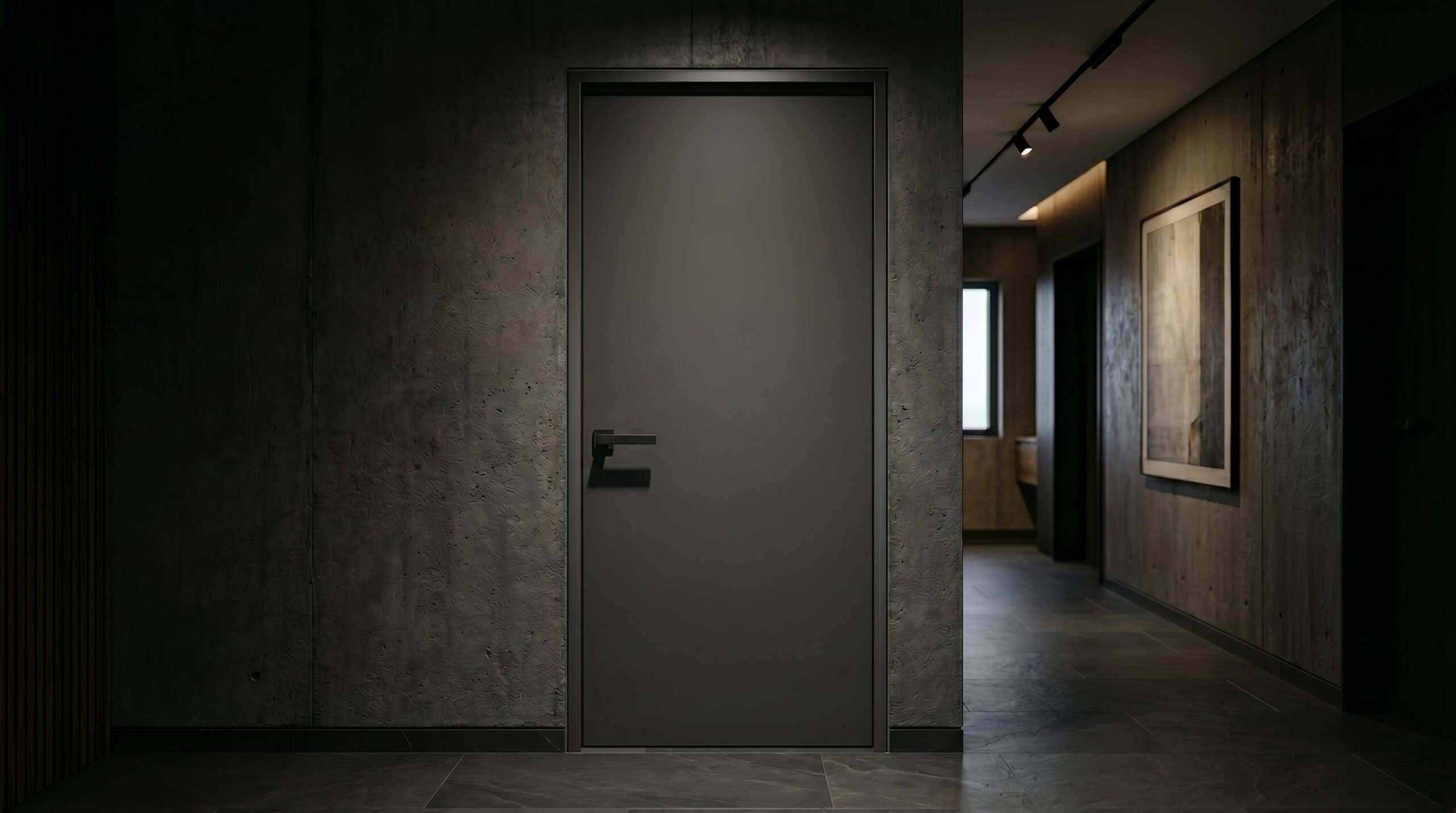
In Indian homes, people say “washroom” more than they say “bathroom,” especially in commercial and apartment contexts. The door is the same physical thing, but when you’re searching for “washroom door design” you’re usually thinking about a specific space: a compact room in an apartment or office, tight on floor area, designed for function first.
This guide covers 15 washroom door design ideas suited to Indian apartment and office washrooms, the material and ventilation choices that matter in this specific context, and what to spend for different budget tiers.
Washroom vs bathroom: the design difference
Technically, a washroom is a smaller, more utilitarian space than a bathroom. A bathroom typically includes a shower or bathtub. A washroom has a toilet and basin, sometimes with a compact shower cubicle.
For door design, this means:
– Washroom doors are often smaller (24 to 30 inches wide) vs standard bathroom doors (30 to 32 inches)
– Washroom doors face more frequent short-duration openings rather than long steamy showers
– Washroom doors benefit more from ventilation (louvres) because the space is compact
– Washroom doors in office and public contexts need more durable locks than residential bathroom doors
15 modern washroom door design ideas
1. Plain flush washroom door
The default. Clean, unobtrusive, professional. Best choice when the washroom is off a bedroom or shared corridor and you want the door to fade into the wall.
2. Louvre bottom-section door
Solid top two-thirds, horizontal louvres on the bottom third. Handles ventilation without compromising privacy.
3. Full louvre door
Horizontal slats running full height. Maximum ventilation. Works best in utility washrooms, staff washrooms, and compact spaces with no exhaust fan.
4. Wood-finish door with single groove
Plain wood-finish ABS with one horizontal or vertical groove. Adds visual interest to an otherwise bland door.
5. Frosted glass insert door
Solid ABS door with a narrow frosted glass strip running vertically or horizontally. Brings light into dark washrooms without privacy loss.
6. Fluted glass insert door
Same as frosted glass but with vertical fluting. The 2026-trending glass choice because it’s more visually interesting than flat frost.
7. Two-panel washroom door
Door split into upper and lower panels by a horizontal rail. Looks intentional without being complex.
8. Sliding washroom door
Mounted on a top track, slides horizontally. Perfect for washrooms in tight spaces where a swing door would block movement.
9. Pocket door
Slides fully into the wall cavity. Highest space-saving option. Requires specific wall construction at build time.
10. Bi-fold washroom door
Two-leaf door that folds in half. Saves clearance space while opening wider than sliding.
11. Barn-style door
Solid door sliding on a visible top track with exposed hardware. Unusual for washrooms but increasingly popular in loft-style apartments.
12. Pattern door with subtle embossing
Faint geometric pattern embossed into the ABS surface. Catches light without screaming for attention.
13. Double door washroom (for larger spaces)
Two narrow leaves meeting in the centre. Used in master washrooms and premium apartment layouts where the opening exceeds 4 feet.
14. Smart lock washroom door
Any design above with an integrated smart lock for families with kids or elderly members. Privacy lock with external emergency override.
15. Matte-finish coloured door
Plain washroom door in a bold colour (deep green, burgundy, charcoal) rather than wood finish. Makes the washroom entrance a design statement rather than a hidden utility door.
Material considerations specific to washrooms
Washrooms face humidity and water exposure, but less intense than full bathrooms. This means the material hierarchy shifts slightly:
| Material | Washroom suitability | Notes |
|---|---|---|
| ABS | Excellent | Waterproof, termite-proof, zero maintenance, lightweight. Default choice. |
| UPVC | Very good | Cheaper than ABS, slightly less premium finishes, otherwise similar performance |
| PVC | Acceptable | Budget option. Flimsier, yellows over time. OK for rentals. |
| Aluminium | Good | Works well but often feels cold and institutional for residential washrooms |
| Wood | Poor | Swells, warps, requires sealing every 2 years. Only acceptable in villa washrooms with exhaust and low-usage frequency |
ABS wins for residential washrooms because it balances waterproof performance, wood-like aesthetics, and zero ongoing maintenance.
Ventilation: the underrated feature
Small washrooms without good ventilation smell bad, grow mould, and make the door itself degrade faster. The door can help.
Louvre options:
– Bottom louvre strip: 6 to 12 inches from the floor. Best discrete option.
– Top louvre strip: 6 to 12 inches from the ceiling. Good for hot air escape.
– Full height louvre: maximum airflow, minimum privacy. Best for utility washrooms.
Door gap under the door (undercut):
– Standard: 8 to 12 mm gap between door bottom and floor
– Reduces mould and helps air circulation
– Specify this at ordering time, don’t let it default to zero
Combined with exhaust fan:
– Louvred doors plus an exhaust fan is the gold standard for washroom ventilation
– Even compact exhaust fans (4 inch) make a major difference
Standard size for washroom doors in India
| Context | Width | Height | Notes |
|---|---|---|---|
| Compact apartment washroom | 24 to 28 inches | 80 inches | Common in 1 and 2 BHK |
| Standard apartment washroom | 30 inches | 80 to 84 inches | Most common size |
| Premium apartment washroom | 32 inches | 84 inches | Standard for 3 BHK+ |
| Villa washroom | 32 to 36 inches | 84 to 96 inches | Larger to match villa proportions |
| Office washroom | 30 to 32 inches | 80 to 84 inches | Standard commercial |
If you’re ordering a washroom door, measure the frame opening width and height precisely. ABS and UPVC doors are usually cut to order so exact measurements save time later.
Budget planning: washroom door prices in India 2026
Standard 30-inch wide washroom door including frame and basic lock:
| Tier | Price range | What you get |
|---|---|---|
| Budget | ₹4,000 to ₹7,000 | Basic PVC, plain finish, economy lock |
| Value | ₹7,000 to ₹12,000 | UPVC or entry ABS, wood finish, decent lock |
| Premium | ₹12,000 to ₹18,000 | Full ABS with pattern or louvre, quality lock, proper installation |
| Luxury | ₹18,000+ | Sliding mechanism, smart lock, designer finish |
Installation adds ₹800 to ₹1,500. Sliding hardware adds ₹5,000 to ₹10,000 to the door price.
Common washroom door mistakes to avoid
-
Choosing a door that matches the bedroom door exactly: washroom doors should complement but not duplicate. Slight variation signals that the room has a different function.
-
Skipping the louvre or undercut: saves ₹500 at purchase, costs you mould cleanup and replaced fittings within 3 years.
-
Buying a wooden door for an unventilated washroom: wood + humidity + no airflow = warped door within 2 monsoons.
-
Cheap hinges on a heavy door: washroom doors open 8 to 15 times daily. Budget hinges fail in 18 months.
-
No emergency lock override: critical safety feature for families with children or elderly members. A door that can’t be opened from outside during an emergency is dangerous.
-
Ignoring the floor gap: undercut or floor gap matters for ventilation. Specify it or the manufacturer will default to the minimum.
Why Kassa ABS is the go-to choice for washroom doors
Kassa’s washroom door range specifically addresses Indian washroom conditions:
- 100% waterproof ABS with matching ABS frame (no steel rust issues at wet points)
- Standard louvre option available on most models
- Specified floor gap for ventilation
- Sliding mechanism option for tight spaces
- Stainless steel hinges included
- 10-year replacement guarantee
See the bathroom and washroom door collection and the related how to maintain bathroom doors guide for care tips.
Frequently Asked Questions
Is a washroom door the same as a bathroom door?
Physically yes, but washrooms are typically smaller and more utilitarian than bathrooms, so washroom doors are often narrower (24 to 30 inches vs 30 to 32 inches), and benefit more from louvres for ventilation.
What is the standard width of a washroom door in India?
Most common is 30 inches wide by 80 inches tall. Compact washrooms use 24 to 28 inches. Premium apartments use 32 inches. Match the frame opening of your washroom rather than forcing a standard size.
Which material is best for a washroom door?
ABS is the best-performing material for residential washrooms in India. It’s waterproof, termite-proof, zero-maintenance, and comes in wood-finish options. UPVC is an acceptable budget alternative.
Should a washroom door have a louvre?
If the washroom has no exhaust fan, louvre is strongly recommended. If the washroom has an exhaust fan, louvre is optional but still helpful for passive airflow when the fan is off.
Can I put a smart lock on a washroom door?
Yes. Smart locks designed for interior privacy use are widely available and install cleanly on ABS doors. Ensure the lock has an external emergency override for safety.
What is the cheapest washroom door option?
Basic PVC starts around ₹4,000 including frame. Acceptable for rentals but tends to yellow, crack, and look dated within 4 to 5 years. For better long-term value, UPVC or entry ABS at ₹7,000 to ₹10,000 is a smarter spend.
How long should a good washroom door last?
Quality ABS washroom doors should last 15 to 20 years with zero maintenance. PVC doors last 5 to 8 years. Wooden washroom doors in Indian humidity typically last 6 to 10 years with regular sealing.
Planning a washroom upgrade? Kassa offers free site visits and customised quotes for washroom doors in all common sizes and designs. Call +91 93848 57732, email info@kassaent.com, or visit kassadoors.com. Available in Chennai, Bengaluru, Kochi, and Hyderabad.